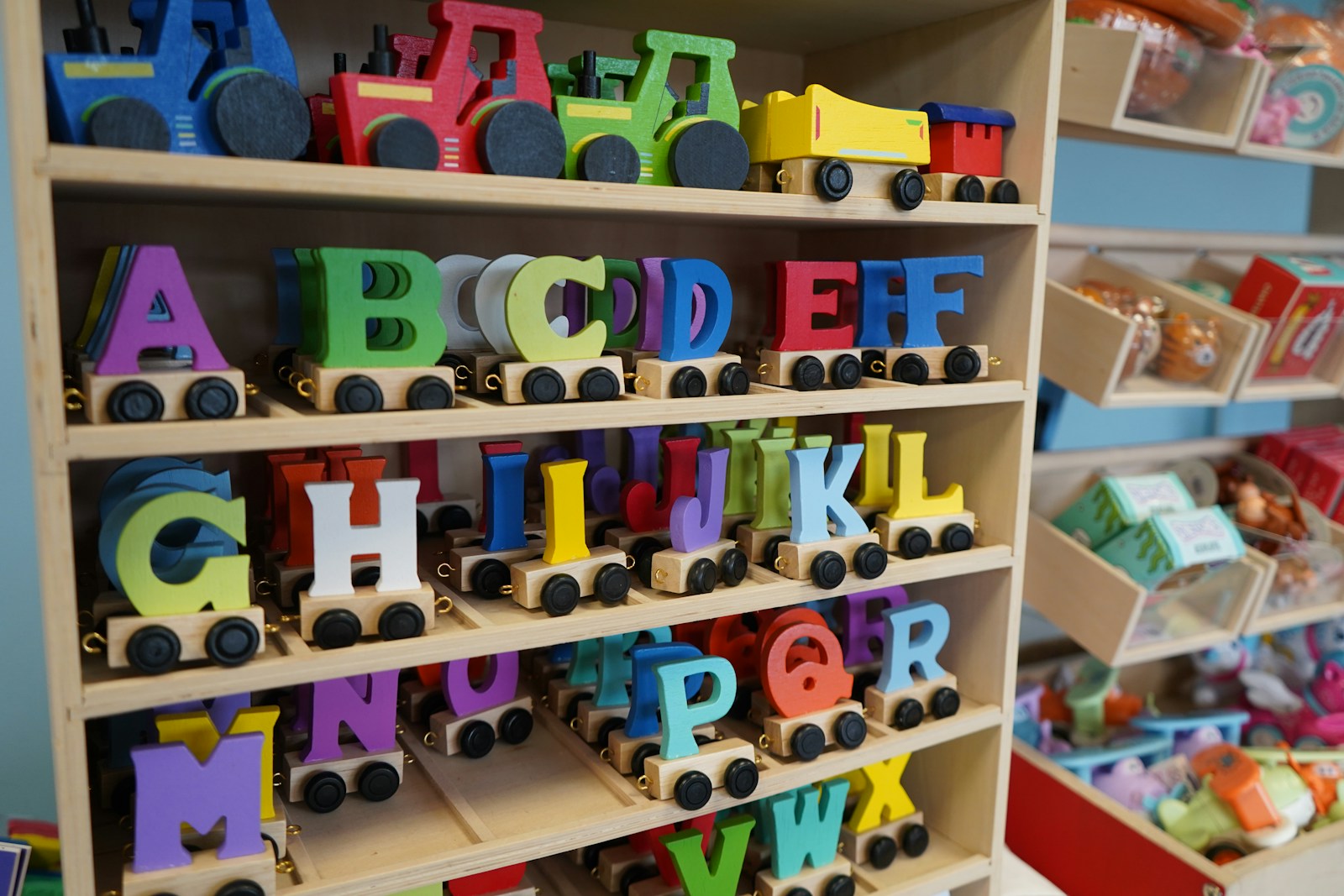
If you want a single lever that lifts reading, writing, and critical thinking at once, it’s vocabulary. The more words your child truly owns, the more precisely they understand the world, and express themselves in it. In this guide on vocabulary building for kids, you’ll get proven techniques to expand your child’s word bank without turning your living room into a classroom. You’ll learn how to make reading the engine of word growth, turn small everyday moments into big learning wins, teach word-learning strategies explicitly, use games and tech wisely, adapt for every child, and track progress in ways that keep motivation buzzing.
Make Reading The Engine Of Word Growth
Why Early Vocabulary Matters
Vocabulary is a strong predictor of later reading comprehension. Kids need to understand most words in a text, around 90–95%, to truly grasp it. That means the earlier you build a rich word base, the easier decoding and comprehension become later. Early vocabulary also supports attention and memory: when a word is familiar, your child’s brain can focus on meaning instead of getting stuck on form.
A quick rule of thumb: aim for breadth (lots of words) and depth (understanding nuances). Knowing that “enormous,” “massive,” and “colossal” all mean “very big” is good: knowing when “colossal” sounds more dramatic than “big” is better.
Choosing Just-Right Books
Pick books your child can read with minimal struggle, plus some that stretch them. Use the “five-finger check”: if they miss more than five words per page, it’s probably too hard to read independently, but perfect for a read-aloud. Mix fiction with nonfiction so they meet story words (whispered, journey, brave) and domain words (photosynthesis, orbit, habitat).
Rotate formats: picture books, early readers, graphic novels, chapter books, magazines, and high-quality blogs for kids. Variety keeps motivation high and exposes different registers of language.
Interactive Read-Aloud Techniques
Don’t just read: perform. Pause at juicy words and give a lightning-fast definition in kid-friendly language: “He was famished, super hungry.” Act words out, point to pictures, and invite your child to try the word in a new sentence. Brief is best: you want flow.
Use the “3S” prompts: Stop, Say, Stretch. Stop for a key word, say a quick meaning, then stretch comprehension with a question: “Exhausted means really tired. How could the hikers show they’re exhausted without words?”
Using Nonfiction And Poetry
Nonfiction packs precise terms your child won’t always meet in stories, like migrate, erosion, or species. Poetry, meanwhile, plays with sound and imagery, metaphor, rhythm, and unusual pairings, which makes new words stick. Read a science page one night and a short poem the next. You’re training both accuracy and artistry.
Turn Everyday Moments Into Word Lessons
Conversation Routines And Modeling
Your everyday talk is a powerful vocabulary curriculum. Model “tier two” words (versatile, fragile, reluctant) in normal sentences: “I’m reluctant to go out without an umbrella.” Then nudge a reply: “When were you reluctant today?” Reinforce in context over a few days so the word migrates from hearing to using.
Use purposeful recaps: at dinner, ask for a “word of the day” story. “Use ‘investigate’ to describe something you explored today.” Short, consistent prompts beat long lectures.
Labeling, Categorizing, And Word Walls At Home
Labels help younger kids map words to the world, door, window, refrigerator, then graduate to functions and attributes: handle, hinge, transparent. Create a rotating mini word wall on the fridge with 5–7 current words. Keep it living: add a synonym, draw a tiny icon, or note a place you heard it that week.
Sorting games push deeper thinking. Sort items by category (tools vs. toys), by material (wood vs. metal), or by function (carries vs. cuts). As kids justify choices, “It’s a container because it holds things”, they internalize definitions.
Word-Rich Play And Pretend Scenarios
Play fuels vocabulary because roles demand words. Set up a pretend veterinarian clinic or space station. Post a few role words, stethoscope, examine, orbit, mission control, and weave them into the dialogue. You might “misuse” a word playfully so your child corrects you: “Hand me the telescope for the cat’s heartbeat, wait, wrong tool?” That little burst of humor cements meaning.
Teach Word-Learning Strategies Explicitly
Context Clues And Inference
Show your child how to be a word detective. Read a sentence with an unfamiliar term and ask, “What clues help us?” Point to synonyms, contrasts, examples, or cause-and-effect phrases. For instance: “Unlike the cheerful morning, the afternoon felt dreary.” If cheerful is bright and happy, dreary must be the opposite.
Make it interactive: cover the word with a sticky note, predict meaning, then reveal and confirm. This turns passive reading into active puzzle-solving.
Morphology: Prefixes, Suffixes, And Roots
Morphology is a cheat code for vocabulary building in kids. Teach common prefixes (re-, un-, pre-, mis-), suffixes (-ful, -less, -able), and roots (tele, bio, graph, aud). Show how they change meaning: preview (see before), replay (play again), joyful (full of joy), fearless (without fear).
Create quick “morpho-mixes”: give a base word (cycle) and add affixes (bicycle, recycle, cyclist). For older kids, explore Latin/Greek roots to unlock academic words: biology, biography, biodegradable. They’ll start decoding meanings on sight.
Semantic Mapping And Synonyms/Antonyms
When a word is important, map it. Put the target in the center, say “generous”, and branch to examples (donating, sharing time), non-examples (stingy), synonyms (giving), and contexts (community, birthday). A 3-minute sketch cements nuance.
Build synonym ladders to teach shades of meaning: small → tiny → minuscule. Then ask your child to pick the “best-fit” word for different sentences. Choosing words for precision is the bridge from vocabulary knowledge to strong writing.
Make It Fun: Games, Tech, And Screen-Wise Choices
Low-Prep Word Games And Car Activities
Keep a few go-tos in your back pocket. Rapid Free Association: you say a word, your child says a connected word within three seconds. Categories on the Go: name items in a category until someone stalls. “I Spy: Synonym Edition”: “I spy something enormous.” Your child guesses the object that fits.
When attention dips, switch to charades for verbs (saunter, stumble, sprint) or “Which One Doesn’t Belong?” using sets like whisk, spatula, planet, ladle.
- Lightning Definitions: take turns giving 5-second kid-friendly definitions. Bonus point for using the word in a sentence.
Digital Tools And Apps With Purpose
Use tech to reinforce, not replace, conversation. Choose apps that require creation and explanation, making a visual word card with a picture, definition, and your child’s sentence, over endless multiple choice. Set a micro-goal (five quality cards, then stop). Pair short sessions with a quick oral recap: “Teach me your favorite new word.”
Screen Time With Dialogue And Co-Viewing
Co-viewing transforms passive screens into word-rich time. Pause a show to unpack a term (“What does ‘camouflage’ mean here?”), or to predict and rephrase lines. Captions can help fluent readers connect spoken words to print, especially for science and history programs. Keep it conversational, not quizzing, curiosity first.
Adapt Strategies For Every Child
Scaffolds For Struggling Readers
Keep texts accessible while protecting dignity. Use decodable or high-interest low-readability books for independent reading and save harder texts for supportive read-alouds. Pre-teach three key words with visuals before reading. During reading, chunk the text and whisper-define in context. After reading, revisit words in a quick game so they stick.
Audio support helps: pair print with narration and follow along. Build wins, short, frequent sessions beat long, frustrating ones.
Bilingual Boost: Leveraging The Home Language
Your child’s first language is an asset. Link cognates (animal/animal, familia/family, planeta/planet) to accelerate English vocabulary. Invite side-by-side definitions: “How would you say ‘curious’ in your home language? When do we use it?” Encourage reading and storytelling in both languages, language strength transfers.
Age-Appropriate Adjustments (Pre-K Through Middle School)
Pre-K: focus on concrete words tied to actions and objects, pour, sticky, enormous, through play and pictures. Keep explanations ultra-short and repeat in routines.
Grades 1–3: expand tier two words and simple morphology. Use hands-on sorting and quick semantic maps.
Grades 4–5: lean into roots/affixes and content-area words for science and social studies. Push precision in writing.
Middle School: teach academic vocabulary, nuance, and tone. Compare near-synonyms (claim vs. assert vs. contend) and analyze how word choice shapes argument.
Track Progress And Keep Motivation High
Simple Assessments And Word Journals
You don’t need elaborate tests. Keep a living word journal, digital or on index cards. For each word: kid-friendly meaning, a personal sentence, a quick sketch, and a checkmark each time it’s used in speech or writing. Flip through weekly and retire truly mastered cards to a “treasure stack.”
Spot-check transfer. Ask your child to explain a new word to someone else (you, a sibling, Grandma on video). Teaching reveals depth.
Spaced Review, Goal Setting, And Rewards
Plan tiny reviews over time, next day, three days later, a week later. It’s the spaced repetition effect, and it’s gold for memory. Set micro-goals: “We’ll learn 3 new words this week and use each twice.” Celebrate with experiences, an extra chapter at bedtime beats sugary prizes and keeps the reading loop alive.
- Mini streaks work wonders: track days you talked about words, not words learned. Consistency matters more than volume.
When To Seek Extra Support
If your child avoids reading, struggles to recall common words after repeated exposure, or comprehension lags even though practice, check in with a teacher or reading specialist. Early intervention, vision/hearing checks, decoding assessments, or language therapy, can remove barriers. Don’t wait for frustration to set in: clarity is motivating.
Conclusion
Vocabulary building for kids isn’t about flashcards alone: it’s about building a word-rich life. When you make reading the engine, turn daily moments into micro-lessons, teach strategies explicitly, and keep it playful, your child’s word bank grows, quietly, steadily, powerfully. Start small this week: pick three words, map them, use them at dinner, and spot them in a book. You’ll feel the momentum, and your child will, too.
Frequently Asked Questions
What’s the best way to make reading the engine of vocabulary building for kids?
Choose mostly “just-right” books plus a few stretch texts. Use interactive read-alouds: briefly define juicy words in kid-friendly terms, act them out, and prompt a quick use-in-a-sentence. Mix fiction, nonfiction, and poetry to build both precise academic terms and expressive language—short, lively pauses keep flow and motivation high.
How can I weave vocabulary into daily routines at home without formal lessons?
Model tier-two words naturally (“I’m reluctant to go out”), then invite a reply using the word. Try a rotating mini word wall on the fridge, quick dinner “word of the day” stories, and sorting games by category or function. Word-rich pretend play (vet clinic, space station) turns talk into memorable practice.
Which word-learning strategies help most with vocabulary building for kids?
Teach context-clue spotting (synonyms, contrasts, examples), morphology (common prefixes, suffixes, roots), and quick semantic maps for important words. Build synonym ladders to practice shades of meaning and precise word choice. These strategies turn kids into “word detectives,” boosting comprehension and transfer to speaking and writing.
How many new words per week is realistic for kids to learn and retain?
Aim small and steady: about 3–7 new, high-utility words per week for younger kids, and 5–10 for older elementary, depending on exposure and support. Depth beats volume—revisit words across days, use them in speech and writing, and space reviews to move knowledge from recognition to ownership.
How much daily time should we spend on vocabulary building for kids?
Target 10–20 focused minutes on most days, woven into reading and conversation. Think micro-bursts: a short read-aloud with quick definitions, a dinner recap using one word, or a 5-minute semantic map. Consistency and spaced review matter more than long sessions, helping motivation and memory stay strong.
No responses yet